
Stirling-PDF: merge, split and sign PDFs on your own machine, without uploading anything
A program you install on your own computer that gives you more than fifty jobs on PDF files through a page in your browser. You merge two files into one, split one into pieces, compress it to fit an email, add a watermark, add your signature, blank out sensitive parts, read scanned paper with character recognition, and convert to and from images or Word. The gain you do not see at first is that the documents go nowhere: they stay on the machine that works them. The app is free and runs without a graphics card.
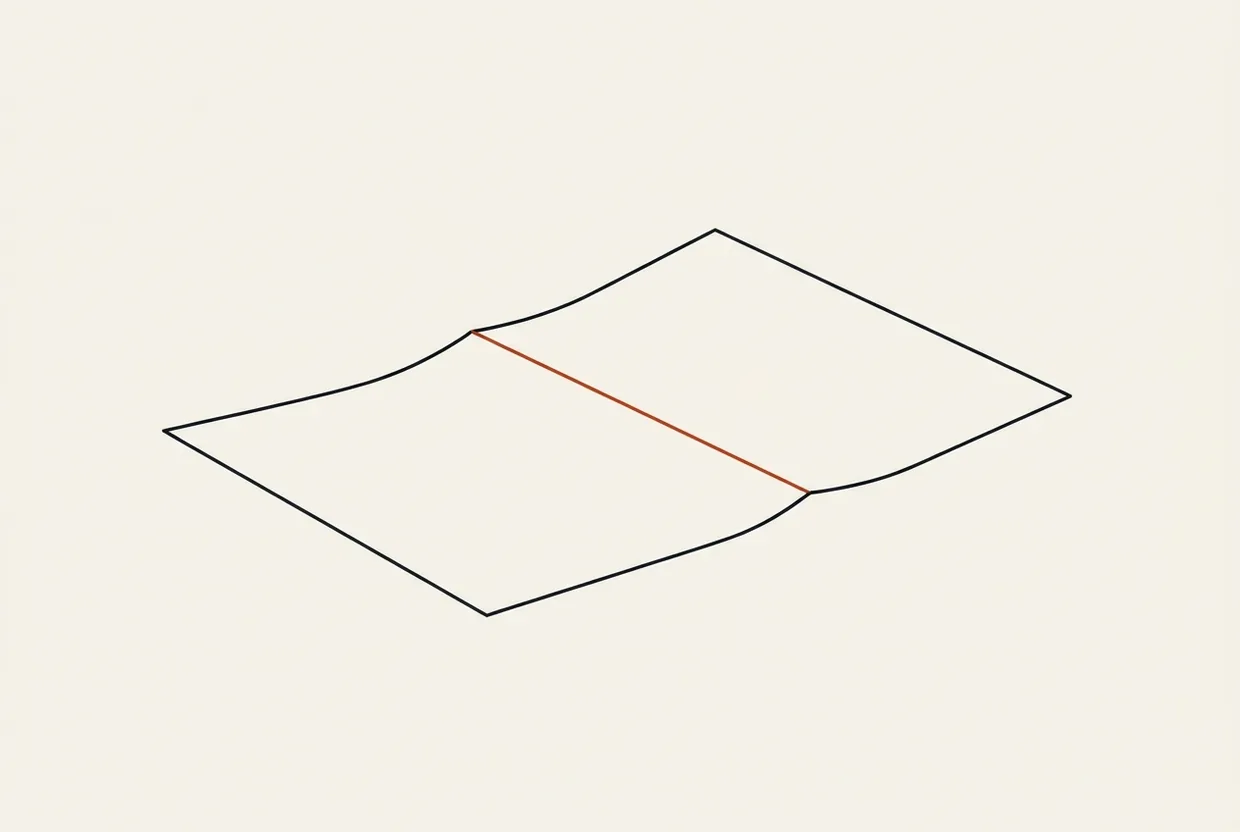
Two words first
You have two pages that must become one file, or a twelve-page contract you want to cut in half. The familiar route is simple: you search, you find a page that does it, you upload the file, you press a button, you download the result. It works, which is why everybody does it.
Stirling-PDF offers the other route. You download a program and leave it running on your own computer. From then on you open a page in your browser — the address http://localhost:8080 — and you see a workshop with more than fifty machines along the wall. One for merging, one for splitting, one for compressing, one for watermarking, one for signing. You press the one you need, you hand it the file, and the file never leaves. It is the difference between carrying your papers to the copy shop down the street and having the copy shop in your basement.
Two words for this. The first is self-hosting: I run the program on my own ground, I do not rent a seat on someone else's. The second is local server. A server is a program that serves pages and answers requests. Local means it listens only on the machine where it runs. So the page you see is not assembled somewhere else; it is your own program talking to you from inside.
That has a consequence you feel immediately: the program works without a network. Pull the cable and the workshop is still there, because everything — the program, the files, the work — sits on the same disk.
Two more terms, because you will meet them below.
The page in the browser is what you press. A field for a file, two or three options, a button. It looks like every other page you have used, and it does not ask you to know anything about computers.
The REST API is the same work without hands. It is a door through which another program asks for something with a network request instead of a click. Instead of pressing "merge these two files", you send a request that says the same thing and you get the result back. That is where anyone building a flow wins: thirty invoices overnight, with nobody pressing buttons.
And character recognition, OCR. A scanned sheet is a photograph of letters, not text. You cannot select it with the mouse, search does not find it, you cannot copy from it. Character recognition looks at the image and rewrites the letters as text, so the file can be read and searched.
If you want one sentence for what it is: it is the copy shop you carry with you, with fifty machines on the wall, and one detail that changes everything — the papers never leave the building.
What it does
For someone who has worked with documents for years, the gain is that you stop chasing a tool per job. One program, one page, and the jobs that usually scatter across five websites and three applications.
The jobs fall into families. In file structure: merge several PDFs into one, split one into many, remove pages, reorder them, rotate, crop margins, change page size. In repair: add a watermark, page numbers, a header, a stamp, and compress the file so it fits in an email. In security: add a password, remove a password, blank out sensitive areas, add your signature. In conversion: PDF to images, images to PDF, to and from Word, scanned paper to searchable text.
The sequence is the same everywhere, and that is the secret of its simplicity. Pick a file, set two or three options, press, download. There is no way to get lost, because each tool is a page with one button at the end.
The same program ships in three forms, and the choice depends on how deep you want to go. The first is the Windows application, with an installer you press and finish — it opens the page itself and you work. The second is the jar file, an executable Java package you start with one command and it serves the same page. The third is the Docker image, for anyone who wants the program running on a server, with a stable address and updates that do not disturb the machine underneath.
And above all of that, the REST API. Whatever the page does, it also does with a network request. It is the same program, it simply also speaks to machines. That is why teams use it to collect invoices, merge reports, or stamp a hundred files with no human in the middle.
The project's numbers, read from the registries on 28 November 2026. The project repository on GitHub carries 97,644 stars, 9,330 forks, 295 watchers and 464 open issues. The project was created on 27 January 2023, and its last change is the same day we read the numbers. On Docker Hub the image has reached 19,688,683 pulls — a number that says this is not a few people trying it out.
The latest release is v3.5.0, published on 22 November 2026. The release page shows how many people downloaded each asset, and the distribution tells its own story. The Windows x86_64 installer has 30,643 downloads, the arm64 one 1,612, the macOS dmg 4,338, the Debian package 6,287, the AppImage 704, the bare jar 3,148, server.jar 558, the rpm package 441 and the macOS tar.gz 1,831. Most people downloading it want something they can click, not something that runs in a terminal.
One asset deserves its own paragraph: latest.json, with 55,854 downloads. It is not a program; it is the feed that installed applications hit to check whether a new version exists. So behind the thirty thousand downloads of the installer sit tens of thousands of installations asking, at intervals, whether they should update.
The licence needs a second look, because it is not one word. GitHub reports it as NOASSERTION, meaning it does not recognise it automatically. Opening the licence file, the text begins "MIT License, Copyright (c) 2025 Stirling PDF Inc." and continues "Portions of this software are licensed as follows:". So it is MIT with exceptions for portions of the program — not MIT from edge to edge. For personal use nothing changes. To put it inside your own product, read first which portions are excepted.
And because you will meet it: the project is open-core. The application you download is free, and beside it sits a commercial tier — "Server Plan & Enterprise" — with single sign-on, auditing and on-premise installation, described in the project's paid offerings. It closes nothing described in this article; it sells the part a company with twenty employees asks for.
And the paragraph that gives the whole article its point. The tool promises that documents do not leave the machine, and that is not a marketing line — it is architecture. An invoice carries a tax number, addresses, amounts. A contract carries terms you do not want read before the other side reads them. A medical paper carries a diagnosis, a name, a date of birth. When you upload such a file to a free service on the network, you give it to someone you do not know, on terms you did not read, for a period you did not set. Here the file moves from your folder into the program's memory and back, without leaving the machine. But the rule holds on one condition: only when you run it yourself. Use a page hosted by somebody else and the promise does not follow you — the files go to their server.
What it does not do
The first and most measured: with the bare jar file, part of the functionality does not start at all. The startup log disables ten jobs — ocr-pdf, repair, replace-invert-pdf, scanner-effect, auto-rotate-pdf, pdf-to-cbr, pdf-to-ua, url-to-pdf, form-detection and accessibility-report — because external helpers are missing: ocrmypdf, qpdf, Ghostscript, tesseract, rar. In practice that means OCR on a scanned document and compression through qpdf do not work with the bare jar. It is not a bug; it is a design decision, because the jar does not carry heavy programs that have their own licences. The full installation brings them, and so does the Docker image or the package for your operating system.
The second: it is not a library. There is no package on npm or PyPI — both registries answer 404. You do not write an import and finish; you raise an application that listens on a port and you talk to it. If what you want is a function inside your own code, this is not that tool.
The third: it is not a cloud service. No account, no sync, no share link, no mobile app, no version history. Whatever you do stays on your disk, which means backups are your job. If the disk dies, there is no "restore from your account".
The fourth: it listens on a port, and a port can open outward. Set it up on a machine with a public address and no protection, and anyone who finds it can hand it files and take results. There is also a build with a login — with-login.jar, with 1,468 downloads in the same release — for anyone who wants a password before reaching the tools. How you fence it is work you take on, not the program.
The fifth: it is not a document management system. No audit trail of who opened what and when, no approval flows, no shared folders with permissions. Those are the things the commercial tier adds, and they are not in the free application.
The sixth, and it matters if you plan to redistribute: the licence is not one thing. It is MIT with exceptions for portions, as we saw. "Open" holds, but it wants reading before it goes into a product.
And the seventh, which I did not measure and give as a limit: the application does many jobs well and none of them to the depth of professional document design software. You do not want it to rebuild a magazine page. You want it for the thousand small jobs around a PDF that today send you to five different websites.
How it is set up
Three roads, and you pick one. You do not need all three; the same application sits underneath.
With the Windows installer
This is the road for anyone who wants clicks and done. Open the release page, download the MSI for x86_64, run it, press "Next" through the screens, press "Install", and at the end the program's page opens in your browser. From there you work with clicks, and the program starts with the system if you let it.
With the jar file
This is the road without an installation: one file, one command. It needs a recent Java runtime. From the folder where the file sits, run:
java -jar Stirling-PDF.jar
The program starts, prints its log, and then answers at http://localhost:8080. The first time takes a few seconds; in our test it was 10.9 seconds to the first answer.
With Docker
This is the road for a stable installation on a server. The image on Docker Hub is given with one command:
docker run -d -p 8080:8080 –name stirling-pdf stirlingtools/stirling-pdf:latest
We did not test that command ourselves; we give it as the image page publishes it. Its pull count, which we quoted above, means enough people are trying it for the number to get there.
The project's installation guide covers all three cases, along with the settings files for folders, languages and memory.
What it needs to work
First and non-negotiable: a recent Java runtime. We measured it — an older one is rejected immediately with a class version error, with no half-start and no page. It is not a chore; it is the reason the program starts in ten seconds rather than a minute.
Second: disk space. The release jar is 313 MB, and beside it the program writes its own working files. I did not measure how large that folder grows after months of use, so I give no number.
Third: a free port, 8080 by default. If something else has taken it, you change a setting — nothing needs deleting.
Fourth: nothing else. No key, no account, no graphics card, no telemetry to anyone. A program that runs on a processor, with as much memory as an office application asks for.
And fifth, for the ten heavy features: external helpers — ocrmypdf, qpdf, Ghostscript, tesseract, rar. The bare jar does not carry them; the full installation does. If OCR is the reason you want it, take the full installation road from the start.
Using it with each assistant
Here is a clarification that saves time, because many articles muddle it: Stirling-PDF is not an MCP server. There is no tool list to declare to an assistant, no schema loaded into every conversation, no setup command inside the program. It is an application with a page and an API. So it needs no declaration at all: the assistant uses it like any other program on the computer — by running a shell command, or by calling the API address.
That is an advantage too. An MCP server is paid for in context in every conversation, even when you never use it. Here you pay nothing until you speak.
Claude Code
Claude Code runs commands in the project folder, so you ask for the job in words and it executes. The call to merge two files is this one:
curl -X POST http://localhost:8080/api/v1/general/merge-pdfs -F fileInput=@first.pdf -F fileInput=@second.pdf -o merged.pdf
It runs from the folder where the two PDFs sit. fileInput is the field that takes the files, and it can appear several times, once per file.
Codex CLI
Same logic, different shell. Codex CLI works inside the project folder and can run the same call. Rotation, for instance, is the same shape with another endpoint and the angle as a field:
curl -X POST http://localhost:8080/api/v1/general/rotate-pdf -F fileInput=@scan.pdf -F angle=90 -o scan-rotated.pdf
Cursor
In the editor, the assistant runs commands in the integrated terminal, so the two calls above work there as they are. The differences are practical: the working folder must be the folder of the files, and the program must be running in the background before you press send — otherwise the answer is "connection refused".
Across all three, the same gain: the assistant does not need to know how a PDF is merged. It needs the address and the two fields, and it finds them on the page the program documents for itself, at http://localhost:8080/v1/api-docs.
Our own measurement
The test used the release file — Stirling-PDF.jar, 313 MB — with a recent Java runtime. The program started in 10.9 seconds and answered at http://localhost:8080 with code 200.
Then we gave it real work, not a demonstration. Two PDF files, one page each, were merged with a single call to its API — POST /api/v1/general/merge-pdfs — and the result was a PDF with two pages. A second job that passed: rotating a page by 90 degrees, with a POST to /api/v1/general/rotate-pdf. Both returned a file, not a success message.
The requirement was measured too. An older Java runtime is rejected immediately, with a class version error — the program does not start at all, it does not break halfway. That is the best shape of failure for a tool someone will put in a flow.
And the limitation was measured in the same log. With the bare jar, ten features are disabled at startup, with names in the log and the reason: ocrmypdf, qpdf, Ghostscript, tesseract and rar are missing. The program does not hide what it cannot do; it says so before you ask.
Finally, the API documentation lives inside the program. At http://localhost:8080/v1/api-docs it answers with a page carrying 139 endpoints and declares version 3.5.0. You do not need to search elsewhere for the name of the field you want.
One statement we keep in every such article: this was measured on one release, with one of the three packages. It is not a guarantee for every system and every installation.
What it costs
Money: zero for the application. No subscription, no key, no limit on files. The commercial tier is for organisations that want sign-on and auditing, and you do not need it to merge two PDFs.
Disk: 313 MB for the jar, and a little more for its working files. That is the real price, and it is paid once.
Time: 10.9 seconds to the first answer. After that, each job takes as long as the job takes — merging two pages is a moment, OCR on forty pages is minutes, because OCR reads an image.
Conversation context: zero. It is not an MCP server, so it loads no tool schema into any conversation. The assistant sees only the command you give it and the answer that comes back — usually one line, or a file.
Memory: I did not measure it. I give no number I have not seen.
Two things that do not show up on the bill, and deserve a line. The licence is not clean MIT: GitHub reports it as NOASSERTION, and the licence file says "MIT License, Copyright (c) 2025 Stirling PDF Inc." and then "Portions of this software are licensed as follows". For a hobbyist nothing changes; for anyone who wants to put it inside a product, it is the first thing they will look at. And there is a commercial tier for organisations — sign-on, auditing, deployment on their own server. The free edition is not a trial, it is the whole tool; the paid tier is not hidden, though, and it is better to know that before you recommend it to someone.
Sources
Project repository on GitHub: https://github.com/Stirling-Tools/Stirling-PDF
Installation and usage guide: https://docs.stirlingpdf.com
The v3.5.0 release page: https://github.com/Stirling-Tools/Stirling-PDF/releases/tag/v3.5.0
The program's image on Docker Hub: https://hub.docker.com/r/stirlingtools/stirling-pdf
Εγκατάσταση
2 ΒΗΜΑΤΑ- java -jar Stirling-PDF.jar
- docker run -d -p 8080:8080 --name stirling-pdf stirlingtools/stirling-pdf:latest
Related
All in Knowledge & Memory
DuckDB: SQL analysis inside your app, without a server
DuckDB is an analytical database that lives inside your application and works without a separate server. It speaks SQL, reads CSV, JSON,…
pgcli: the light Postgres shell that guesses what you want to type
pgcli is a small terminal program that helps you talk to a Postgres database, which is a free and widely used place…
openwiki: the repository wiki that writes and maintains itself
openwiki is a command-line tool from langchain-ai with an interactive terminal surface. It reads your repository and builds a Markdown wiki, then…